Business Context
A retail distribution business required deeper visibility into product performance, customer profitability and inventory efficiency to support commercial decision-making. Using a relational sales database, this project applies SQL to analyse revenue drivers, inventory dynamics, and customer value.
Database Overview
The database includes:
- customers
- orders
- orderdetails
- products
- productlines
- payments
- employees
- offices
Structured relational joins were used to analyse transactional and financial performance.
Analytical Objectives
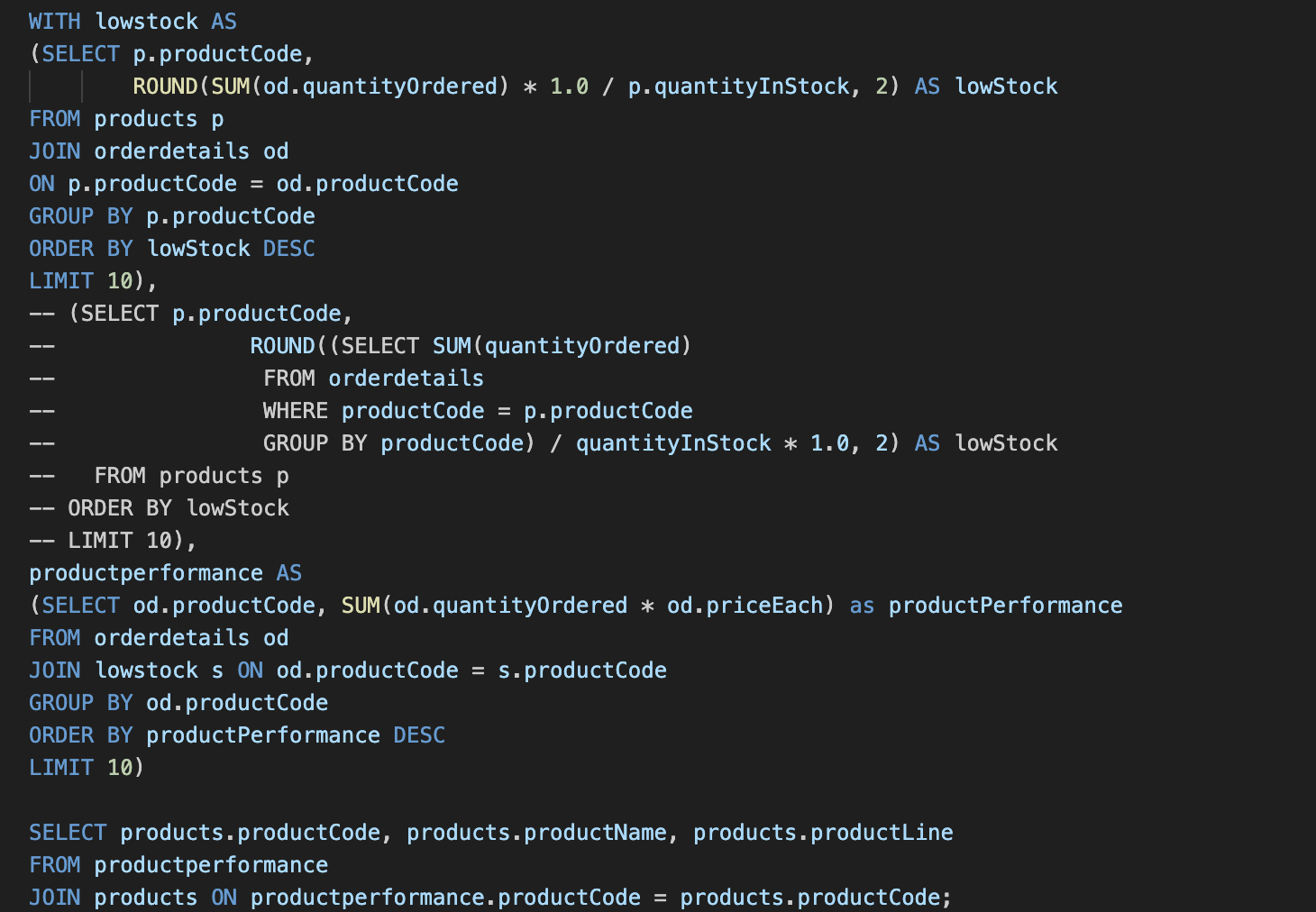
1️⃣ Inventory Optimisation
- Identify high- and low-performing products
- Compare stock levels against sales volume
- Highlight potential overstock or understock risks
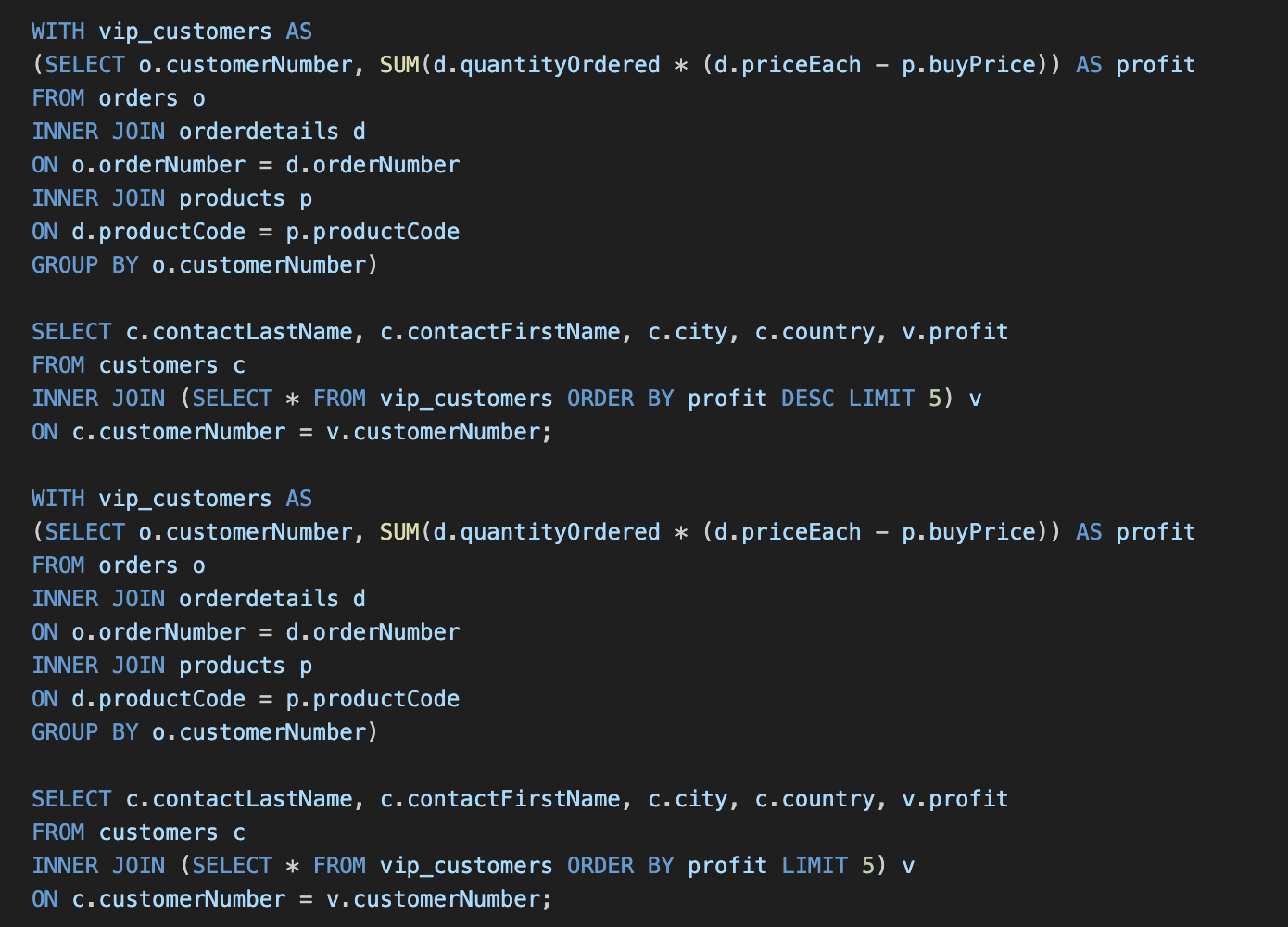
2️⃣ Customer Profitability Analysis
- Calculate total revenue and profit by customer
- Identify top-performing and low-value customers
- Assess revenue concentration risk
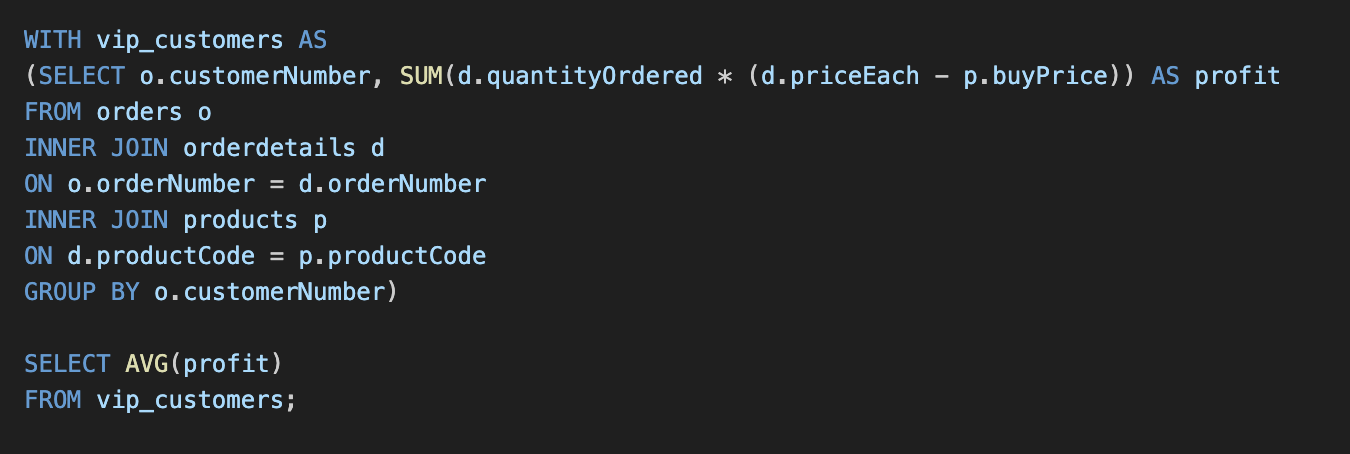
3️⃣ Revenue & Acquisition Economics
- Calculate average profit per customer
- Evaluate profitability distribution
- Support informed customer acquisition spending
SQL Techniques Applied
- Multi-table joins across transactional schema
- Aggregation and grouping
- Revenue and profit calculation
- Subqueries and Common Table Expressions (CTEs)
- Window functions for ranking customers and products
- Conditional logic for performance classification
Key Insights
- A small proportion of customers contributed a disproportionate share of total revenue
- Several products showed low turnover relative to inventory levels
- Revenue concentration suggests both opportunity and risk in customer portfolio structure
Commercial Implications
- High-value customers warrant retention and account management focus
- Inventory purchasing decisions should prioritise fast-moving product lines
- Customer acquisition spend should be benchmarked against average lifetime profitability
Tools
SQL | Relational Database Analysis | Revenue Aggregation | Window Functions | Inventory Performance Analysis